Premiere of Kołysanka: A Lullaby Unearthed from Auschwitz

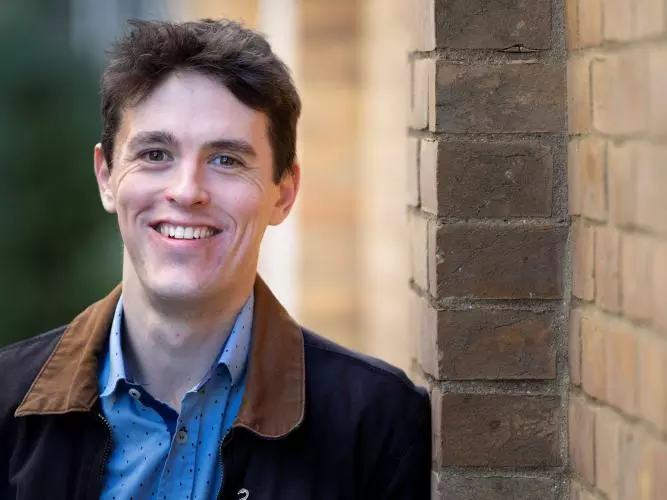
DPhil student Leo Geyer founded an orchestra when he was 19 which has grown to become Constella Music. On Wednesday 23 October, Constella will premiere the first-ever recording of Kołysanka (Lullaby), a poignant composition written in Auschwitz in 1941. The recording is part of a wider Constella project called Orchestras of Auschwitz, which will see music manuscripts discovered at Auschwitz meticulously recomposed into an opera-ballet by Leo.
Leo writes:
After 8 years researching the orchestras of Auschwitz, I am delighted to present this music to the public for the first time. The music does not seek to express the horrors of the camp, but rather strives to escape it. With rich and luscious harmony, you can hear Kopyciński reaching beyond the barbed wire to evoke a memory of better times. We don't know if it was performed in Auschwitz, but if it was, it would have been secretly, most likely with Kopyciński at the piano. To those listening, perhaps it would have been a chink of light in darkness: a glimmer of hope.
This lullaby is a unique example of music composed in Auschwitz, and it is even rarer that the manuscript has survived. The primary function of the orchestras in Auschwitz was to provide marching music, allowing prisoners to march to and from gruelling labour. As a result, the orchestras served a practical purpose, leaving little room for artistic expression among their members. When the camp was liquidated, the Nazis destroyed much of the site to conceal their atrocities, including a significant number of musical manuscripts and instruments. Fortunately, this is one of the manuscripts that endured, and Leo has revived it as part of his doctoral work at Oxford University. It was penned by by Polish musician Adam Kopyciński, a political prisoner who served as the conductor of the men's orchestra in Auschwitz.
The piece was performed by Mateusz Borowiak, a London-born pianist who studied piano and composition at the Junior Guildhall and the University of Cambridge before pursuing full-time piano studies with Professor Andrzej Jasiński in Katowice.
This groundbreaking event will be streamed exclusively via the Constella Music website and on YouTube, offering audiences an opportunity to engage with an important piece of musical and historical heritage that has remained overlooked in the archives of the Auschwitz-Birkenau State Museum for over 80 years.

In concert: how shared wonder opens our minds