Public seminar: Giles Masters (University of Bristol)
'For a Semi-Public Musicology (or, Hindemith in the Playground)'
Free entry, no registration required
Abstract
Recent think pieces, panel discussions and pedagogical initiatives concerning public musicology have proven invaluable in fostering a sense of shared commitment, clarifying what is at stake and providing practical advice for addressing 'non-academic' audiences. In our eagerness to overcome the presumed chasm between the university and society, however, we have arguably brushed over some fundamental, if potentially awkward, questions: Which public (or publics) are we talking about? What do we want to achieve by engaging with them? What might they have to teach us? Recently, scholars of Western art music have used their public-facing work to contribute to wider efforts to diversify the concert repertoire and to question established historical narratives. Yet even those important achievements have often been realised through familiar, monological modes of presentation, such as the programme note and the pre-concert talk.
Written from the perspective of a music historian, this talk explores an alternative approach, combining elements of what Naomi André (2018) terms 'engaged musicology' with the practices of music education and community music. Between 2023 and 2025, I worked with a network of partners from higher education, the cultural sector and beyond to develop 'Let's Build a Town!', a creative arts project in Oxford. Taking inspiration from recent research on Paul Hindemith's music for children - and seeking to reimagine his aspiration to promote young people's agency and creativity through play - we organised a series of workshops and rehearsals at a primary school and a secondary school in east Oxford. The project culminated in a performance in which scenes from Hindemith's Wir bauen eine Stadt (1930), an experimental work of music theatre, were interspersed with new, co-created music, movement and performance games. Drawing on interviews with a multidisciplinary team of artists and workshop leaders, I ask what added value (if any) a music historian might bring to a community arts project of this kind, and reflect on the advantages and limits of a more modest, localised and genuinely collaborative model of semi-public musicology.
Biography
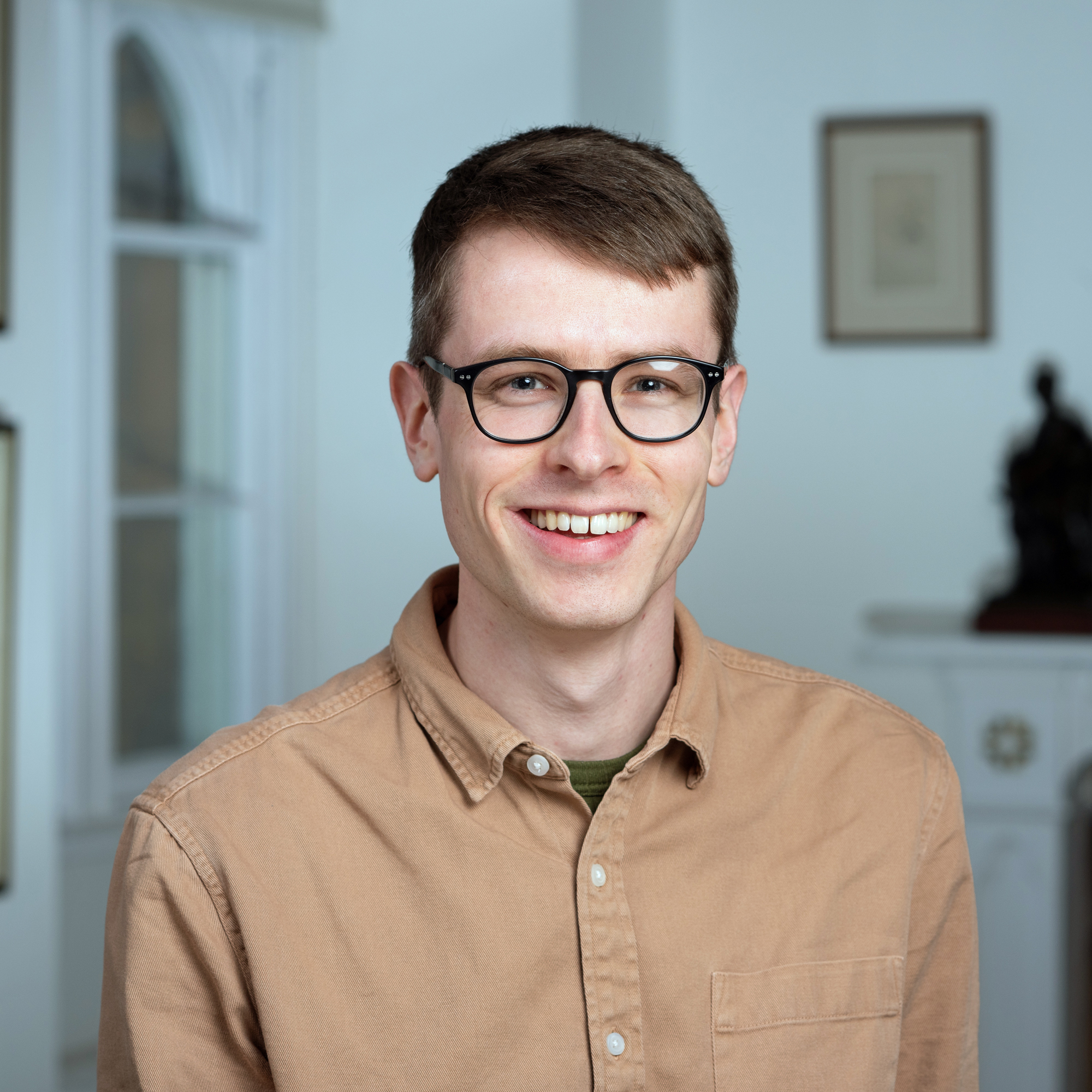
I am a historian of 19th- and 20th-century music, specialising in modernism, cultural politics and transnational history. I have recently taken up a fixed-term appointment as a Lecturer in Music at the University of Bristol, on temporary leave from my position as a Fellow by Examination (JRF) at Magdalen College, Oxford. Since completing my PhD at King's College London in 2021, I have also worked as a Postdoctoral Research Associate at the University of Nottingham and as a Lecturer in Music at KCL. My research has appeared in publications including the Journal of the Royal Musical Association, Twentieth-Century Music and the edited collection Sonic Circulations: Music, Modernism, and the Politics of Knowledge (University of Pennsylvania Press). In 2024, I was awarded the Jerome Roche Prize by the Royal Musical Association for 'an outstanding article by a scholar in the early stages of their career'. In recent years, as this talk will explore, I have also pursued collaborative work at the intersection of music education, community music and public engagement.