

Public seminar: Matthew Jarvis, Electra Perivolaris, Emmanuel Sowicz, and Jessie Edgar (University of Oxford)
DPhil students
Free entry, no registration required
'What does modern Dominican chant have to do with its medieval origins?'
Abstract
The Dominican Order, founded in the thirteenth century, inherited high medieval forms of Gregorian chant and moulded these to suit its unified liturgical and organisational structures, to undergird an international preaching mission. Friars needed to sing the same things in the same way, especially when gathering annually at a General Chapter. But while we have the rules of Dominican chant as codified in the 1250s by Humbert, the fifth Master of the Order, do these provide practical access to how the chant was sung? How do Humbert’s rules correspond to later Dominican books, right up to the twentieth century? Tracing tones (melodic patterns) across the centuries is one thing; interpreting the rhythm of the chant is quite another. In this presentation, I will share some initial results and ongoing questions.
Biography
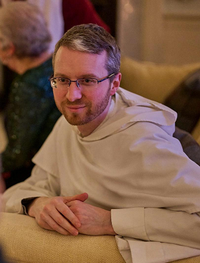
'Dialogues, Encounters, and Entanglements: Developing a compositional practice which reimagines and examines relationships between humans and nature'
Abstract
This paper outlines my artistic research into composition as a means of exploring human–nature interconnection. Drawing on eco-musicology, anthropology, and cultural geography, I critique anthropocentric perspectives and pastoral traditions, proposing a “post-pastoral” approach that embraces ecological complexity and tension. Through composition and community-based practice, I investigate how music can express interwoven relationships between human and more-than-human worlds. The research emphasises listening as an immersive, embodied practice and foregrounds sustainable, participatory creativity. It positions composition as a collaborative ecological process that fosters empathy, challenges binary thinking, and highlights the interconnectedness of all life.
Biography

'Constructing Chamberhood | The Guitar Quartet and the Making of a Tradition'
Abstract
What does it mean for an instrument to belong to a chamber music tradition? The classical guitar has long participated in collaborative music-making, notably within nineteenth-century salon and domestic ensemble practice. Despite this, it has remained marginal to broader chamber narratives. This paper argues that, in response, musical arrangement has been used to retrospectively construct chamberhood, allowing guitarists to claim a new belonging to chamber traditions from which they found themselves previously excluded.
Guitar quartets, in particular, frequently adapt music associated with canonical composers and genres, at once expanding their repertoire and building identity within broader chamber narratives. Drawing on arrangements of Brahms, Debussy, and Glinka, I suggest how chamberhood is assembled through arrangement, repertoire emulation, and ensemble design – grounded in the use of four identical instruments in equal conditions. Importantly, these efforts often take place in a post-canonical context, where such repertoires are approached under contemporary conditions, rather than as untouchable monuments.
Borrowing Stephen Goss’s notion of retrotopia, which warns of backwards-facing cultural pressures, I argue that guitar quartet arrangements do not merely constitute nostalgic retreat or conservative emulation of established chamber formations. Rather, they often redirect retrotopian impulses, mobilising canonical repertoire as sites of ensemble experimentation and technical innovation. Recent innovations in guitar ensemble technique – including forms of distributed virtuosity – are enabling quartets to adopt increasingly complex repertoires, transforming arrangement into a creative laboratory that yields new ways of reconciling past and present.
Understanding chamberhood as constructed reframes how marginalised instruments might negotiate their repertoires, perceived legitimacy, and professional viability. The guitar quartet thus offers a case study in rethinking chamber music traditions beyond the lineage of stable formations and canonical genres.
Biography
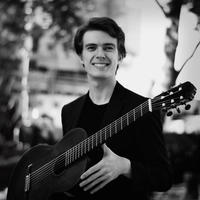
Emmanuel Sowicz is a classical guitarist and second-year doctoral researcher at the University of Oxford, where he investigates how musical arrangement has shaped the classical guitar tradition. His research is supported by St Catherine’s College, where he holds the Allen Senior Music Scholarship. Winner of the London International Guitar Competition and Dr Luis Sigall International Music Competition, Emmanuel has commissioned and premiered over a dozen new works, and his own arrangements have been published in Gendai Guitar and recorded for Decca. In 2025 he performed as soloist with the Chilean National Symphony Orchestra and was elected an Associate of the Royal Academy of Music (ARAM). Upcoming highlights include his debut as soloist with the Alina Orchestra, performing Rodrigo’s Aranjuez Concerto at the Buckingham Music Festival.
'The Singer as Listener: own-voice perception through age-related hearing loss'
Abstract
It has been documented that participation in choral singing can benefit aspects of the aging auditory system and that many people in the age range pertinent to age-related hearing loss (ARHL) participate in choral singing. But it has not been documented how one's perception of their hearing loss affects the enjoyment of and participation in singing for people who have been singing for a majority of their lives. This talk theorizes how singers are simultaneous listeners; emphasizing that a singer's listening during performance can be mediated both by their immediate environment and by their metacognitive awareness of their own voice. Data will be presented about a group of 26 experienced amateur choral singers with age-related hearing loss, triangulating hearing tests, singing tasks, interviews and surveys.
Biography
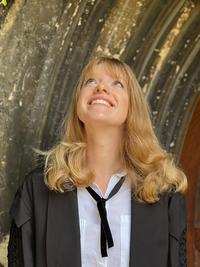
Jessie Edgar is pursuing a DPhil in music and is also affiliated with the clinical auditory neuroscience lab in the Department of Physiology, Anatomy and Genetics. She graduated from Columbia University with honors in music and psychology and came to Oxford to complete her MPhil in musicology studying women's voices in the English Choral Tradition. Jessie is published in the Journal of Women in Music, the Routledge Companion to Voice and Identity and the International Journal of Music, Health and Wellbeing. She has presented her work at conferences such as the Royal Musical Association and the Association for Research in Otolaryngology and has worked in labs looking at hearing loss and auditory attention. Following her DPhil, she will be working on a project at the University of Leeds to produce instrument-specific guidance for performing musicians who use hearing aids. Alongside her work she enjoys singing early music and swimming.

