
Romantic Sonatas: Pablo Tejedor-Gutiérrez (cello) and Laura Granero (fortepiano)
Tickets £10 (£5 students) will be available on the door (cash and card)
Hélène de Montgeroult Deux études (Cours d'enseignement du pianoforte)
Helene Liebmann Grande Sonate pour Pianoforte et Violoncelle op 11, II Adagio ma non troppo
Emilie Mayer Sonata for fortepiano and cello in E minor (II Un poco adagio III Scherzo)
Clara Schumann Mazurkas, Nocturne; Violin (cello arr) Romanza no 2
Emilie Mayer Sonata for fortepiano and violoncello in C Major (III Un poco adagio I Lento - Allegro)
Hailed by her contemporaries as one of the most important German composers after Beethoven, Emilie Mayer enjoyed great success during her lifetime. However, her name is today still fairly unfamiliar, having not been included in the canon of (mostly male) composers.
Mayer had a very prolific and multifaceted talent, and she was able to create a very vast and diverse catalogue, with pieces ranging from lieder to orchestral symphonies. In the last period of her career, she devoted her attention to the cello repertoire, composing a dozen sonatas. Most of these pieces have not been played since their premieres lying unheard at the Berlin Staatsbibliothek archive.
The Mayer Project aims to rediscover these pieces and to offer modern premieres in concerts, and ultimately recordings of them. The project is kindly supported by the Royal College of Music Careers Centre and has future concerts in Basel and Berlin.
During the recital at the Holywell Room, a Sonata or Fantasia by Fanny Hensel will be performed as well to compare Emilie Mayer's work with a piece by another celebrated 19th c woman composer from the same country that has many similar stylistic traits.
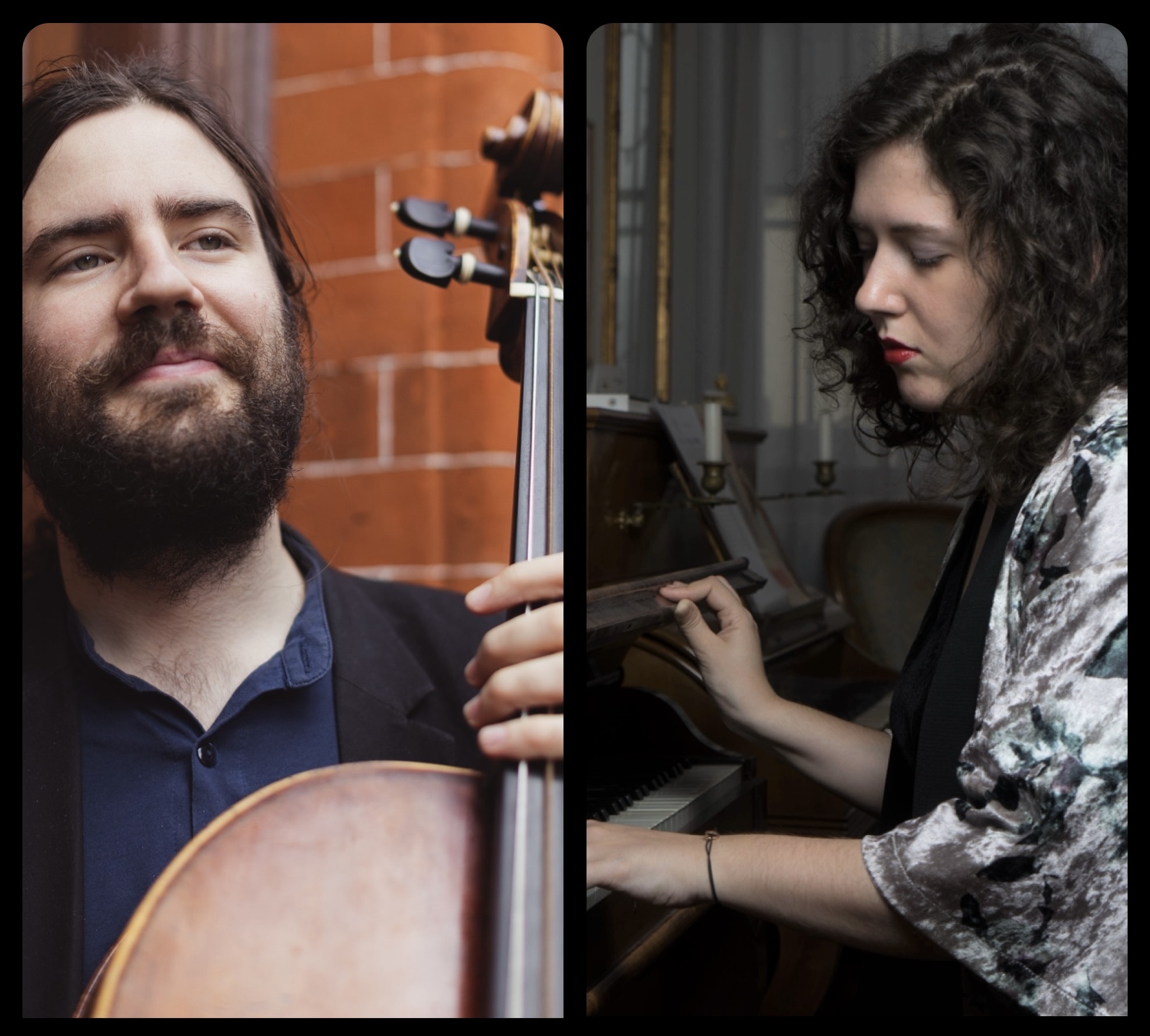
Laura Granero, fortepiano
Laura Granero is one of Europe's most active young fortepiano performers. Inspired by the models of performers of the past, she combines a multi-instrumental profile (fortepiano, harpsichord, piano) with the regular practice of tasks such as transcription, improvisation, and composition. As a researcher, she specialises in 19th-century performance practice. She is particularly interested in the piano school of Clara Schumann, historical recordings, and piano rolls, as well as the exploration of vocality at the (forte)piano. As a performer-researcher, she aims to bring to her playing the same sense of freedom that is to be found in the first recording artists.
Laura is particularly committed to the visibility of women performers and composers of the past. She is the Artistic Director and Founder of the FANNY DAVIES Ensemble, awarded winner with three prizes at the International van Wassenaer Competition of the Early Music Festival in Utrecht in its cello-fortepiano version with Javier López-Escalona.
Pablo Tejedor-Gutiérrez, historical cello
Pablo Tejedor-Gutiérrez is a cello and gamba player specialising in Historical Performance. As a solo instrumentalist, he won third place at the 2023 Spanish National Early Music Competition (Jeunesses Musicales) and received the 2022 BritishSpanish Society Arts Award. Numerous institutions have supported Pablo, from the Excellence Scholarship of the Wilsdorf Foundation to the Société des Amis du Conservatoire de Genève or the RCM, The Henry Wood, The Macfarlane Walker and The Helen Rachel Mackaness Trusts. Having studied in Spain (Aldo Mata), Switzerland (Bruno Cocset, Guido Balestracci and David Pia) and the UK (Royal College of Music), he has also attended masterclasses with Christophe Coin, Jaap Ter Linden, Sara Mingardo, Antonio Florio, Lucia Swarts, David Watkin, Michael Chance, Jonathan Manson or Kristin von der Goltz.