
Graduate Research Colloquia: Professor David Trippett (University of Cambridge)
Siegfried's Polychronics: towards a musical application of animal listening
Abstract
Nineteenth-century histories of human-animal aurality have typically centred on questions of animal 'music' in which music shores up the identity of being 'human' as much as human listening authenticates the value of what music is or should be. Being animal became an index for calibrating through sound the higher value of being human (Gautier 2014; Zon 2017; Mundy 2018).
Against this impulse, in this talk I trace an intersection of natural scientists and music theorists that posed a different kind of question: when did the penny drop that animal aurality was quantifiably different to humans? And could this difference be calculated, even simulated for human listeners? Attempts by nineteenth-century physiologists Johannes Müller and Karl Ernst von Baer, alongside the Leipzig theorist Moritz Hauptmann, offer case studies in the attempt by European naturalists and musicians to understand animal hearing. These mostly took the form of thought experiments that sought to re-quantify space and time. In this paper, I revisit these experiments in relation to Richard Wagner's famous depiction of animal-human communication in Siegfried where the phenomena of polychronic listening and drug use, as mechanisms for altered perceptual realities, becomes recontextualised within discourses of nineteenth-century comparative anatomy and debates over human/animal identity.
Biography
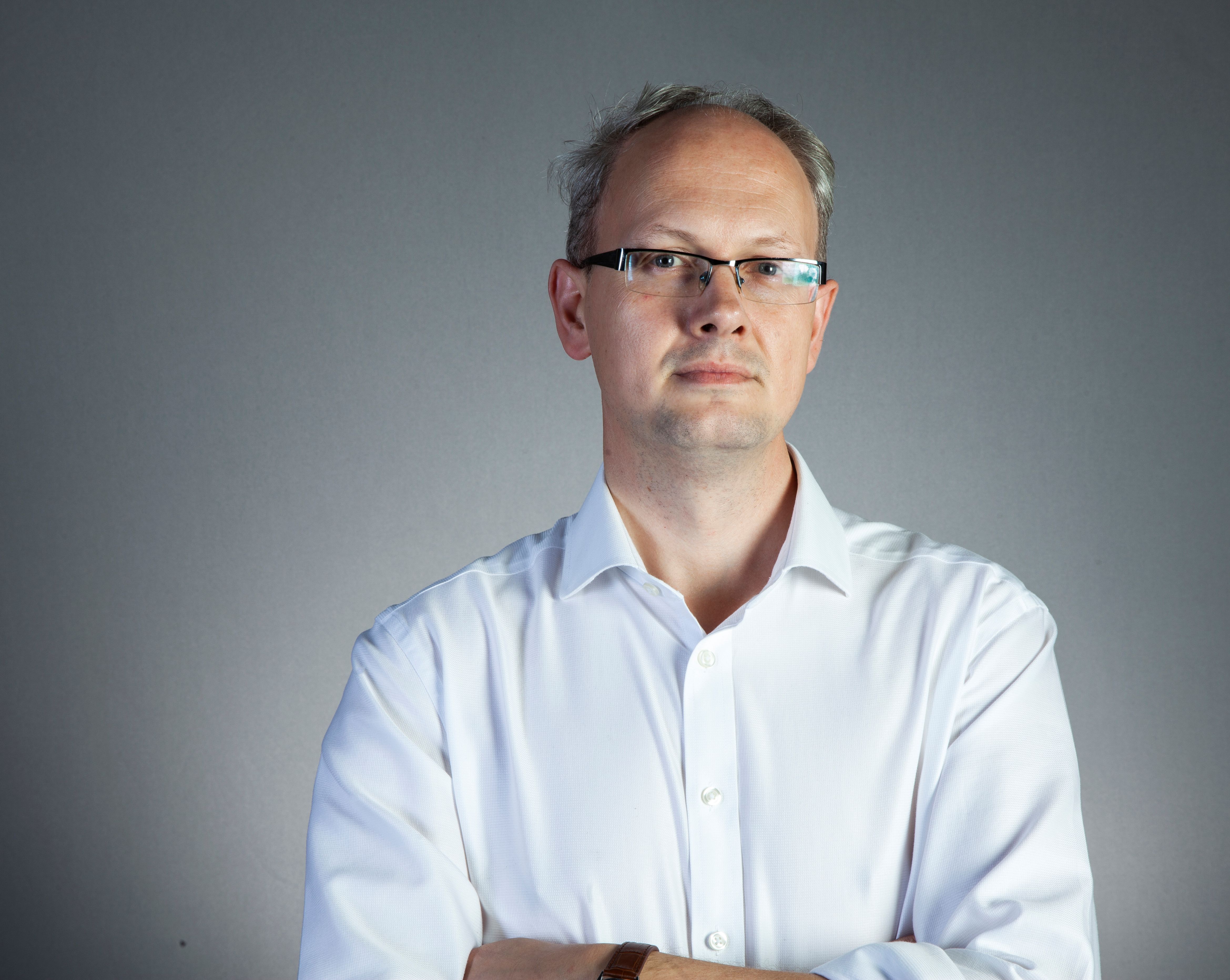
David Trippett is Professor of Music at the University of Cambridge, and a Fellow of Christ's College. His research focuses on nineteenth-century intellectual history, Richard Wagner, and the philosophy of technology.
He is author of Wagner's Melodies (2013), editor and translator of Carl Stumpf, The Origins of Music (2012), and co-edited both The Cambridge Companion to Music in Digital Culture (2019) and Nineteenth-Century Opera and the Scientific Imagination (2019). A further edited volume, Wagner in Context, appeared earlier this year with Cambridge University Press. Awards for research include the Alfred Einstein and Lewis Lockwood Prizes of the American Musicological Society, and the Bruno Nettl Prize of Society for Ethnomusicology. Between 2015-2020, he was PI for an ERC Starting Grant on 'Sound and Materialism in the Nineteenth Century', and is completing a monograph arising from this.
In more hands-on work, he produced the first critical and performing editions of Liszt's Italian opera Sardanapalo (1851 / 2018), which has now been performed in six countries. In recent years, he has given lecture-recitals in the Liszt Academy Budapest and the Library of Congress, and is conducting the Philharmonia Orchestra in a project to record three CDs of contemporary music.
There will be an opportunity to dine with the speaker after the talk. Please contact the co-convenors, Betty and Jessie, to register in advance.