Public seminar: Gavin Lee (Sydney Conservatorium and University of Adelaide)
The Unbearable Lightness of Being Chiang Wen-yeh: War, Colonialism, and the Cultural Revolution
Free entry, no registration required
Abstract
Identity is the one of the key constituents of music studies, but in many contexts, composers find themselves split between inner beliefs and external actions coerced by colonial, political, and nationalist ideologies that were policed militarily. Hence their lives unfolded in self-preservation mode, conforming outwardly to externalities, rather than only being anchored in an authenticist notion of self or heroic conception of agency. Alienation is prevalent in times of upheaval, when composers find themselves dislocated by forces at different scales.
In modern Chinese history, composers were dislocated by war, exile, studies abroad, and nationalist, social realist and colonial ideologies, and the Cultural Revolution, as seen in their dairies, letters, essays, music, and even poetry, which addressed distant loved ones and expressed their cultural and ideological constructions and articulation of home, isolation, and war resistance, while being caught in intersecting webs of forces that compelled them through both coercion and affiliation. "Heaviness," in this paper, refers to how composers were weighed down by politicized identities foisted onto them by circumstances. For the composer Chiang Wen-yeh, who was born in Taiwan in 1910 (by then a Japanese colony), who was educated in Japan as a teen and worked in Beijing from 1938 to the end of his life, this weight consisted of the following: 1) a "colonial" identity as a subject of the Japanese empire, which had facilitated his move to Beijing that had been under Japanese control since 1937-for this reason, Jiang was imprisoned for 10 months in 1945-6; 2) a Western (avant-garde) compositional identity, for which he was branded "rightist" and sent for hard labor for 7 years during the Cultural Revolution; 3) a Taiwanese identity, which meant that his works could not be performed in China after 1949, when Taiwan split from the mainland; 4) a Chinese identity, which is how he has been received after the Cultural Revolution, when the composer's branding as rightist was rescinded, and he was now part of the nationalist apparatus. In contrast to the weight of all these identities, I argue that what Chiang sought for throughout his life, as evidenced in his diaries, poems, essays, and his masterpiece Grand Music of the Confucian Temple, was a mystical, syncretic Confucian-Buddhist-Scriabinesque transcendence into-as he put it-a music beyond sound, that manifests as "gas" and "light" in the cosmos.
Biography
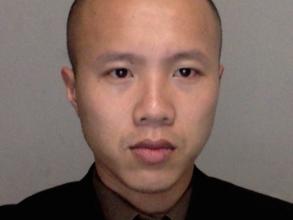
Gavin S. K. Lee is a Senior Lecturer at Sydney Conservatorium and Elizabeth Wood fellow at University of Adelaide, who specializes in Sinophone, global, and LGBTQ+ music history. Previously, he was a visiting scholar at Western Sydney University (2022-3) and taught at Soochow University, China for 9 years. A former editor of the International Musicological Society's publication Musicological Brainfood, Lee has presented guest lectures in the US, Australia, South Korea, Taiwan, and China, including a keynote for the Musicological Society of Australia 2023 conference. He is the editor of Queer Ear (OUP, 2024 SMT award), Rethinking Difference in Gender, Sexuality, and Popular Music (Routledge), and the special journal issues "Global Musical Modernisms" (TCM) and "Global Music History Course Design" (JMHP).